How Will AI Affect Jobs in the UK? What the 2026 Evidence Shows
AI is not wiping out UK jobs wholesale, but it is squeezing entry-level hiring and reshaping office work fast. Here is what the 2026 data from the ONS, PwC, Adzuna and others actually shows, and which roles are most and least exposed.
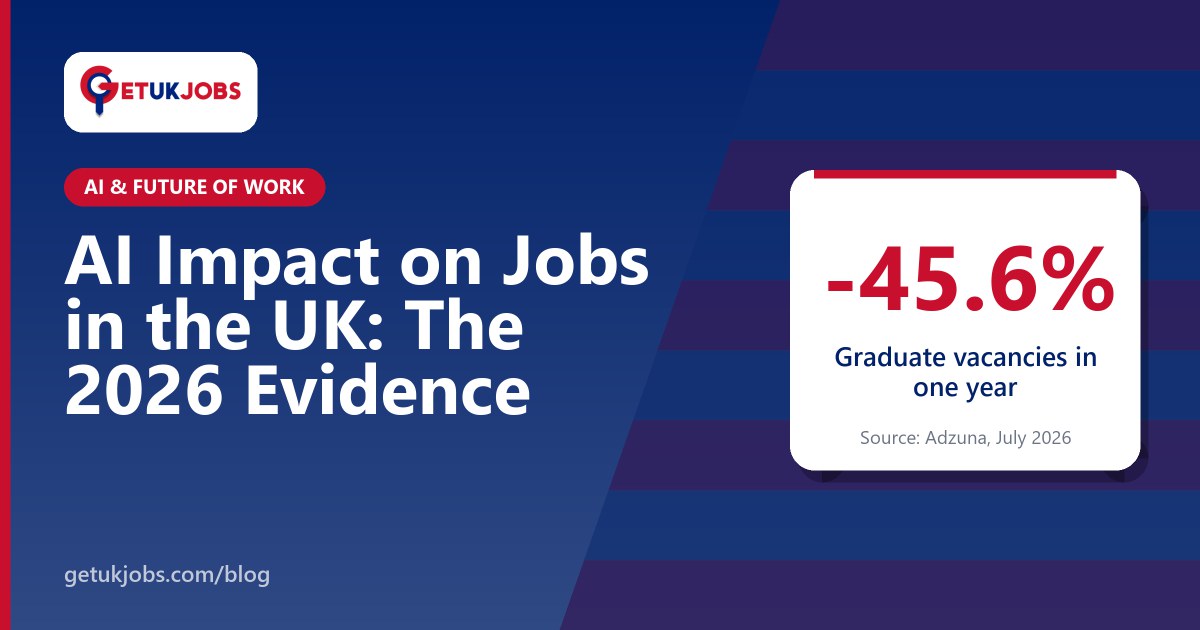
Table of contents
- Is AI taking jobs in the UK in 2026?
- Why are graduate and entry-level jobs being hit hardest?
- Which UK jobs are most exposed to AI?
- Which UK sectors are adopting AI fastest?
- Is AI creating jobs in the UK as well?
- Will AI take my job? A quick self-check
- What is the UK government doing about AI and jobs?
- What should UK job seekers do now?
- Sources
Last reviewed: 17 October 2026
Short answer: the AI impact on jobs in the UK is real but uneven. AI is changing work faster than it is destroying it, but the pain is landing on the first rung of the career ladder. Around 29% of UK businesses were using AI by June 2026 (ONS), graduate vacancies on Adzuna fell 45.6% in a year to July 2026, and 43% of employers in a Work Foundation survey said AI or automation investment had reduced their entry-level roles. At the same time, UK workers with AI skills earned a 34.2% wage premium in 2025 (PwC).
So the honest picture is mixed. Some work is disappearing, much more is being reshaped, and people who can use AI well are being paid more for it. Here's what the evidence says, sector by sector, and what you can do about it.
Key takeaways
- 29% of UK businesses used at least one AI technology in June 2026, rising to around half of firms with 250+ staff (ONS Business Insights and Conditions Survey).
- Graduate vacancies fell to 8,383 in July 2026, down from 15,397 a year earlier and the lowest since Adzuna's records began in 2016.
- 43% of UK employers say AI or automation investment has cut entry-level roles, rising to 60% of large employers (Work Foundation / Survation, May 2026).
- Among AI-using firms, 38% said administrative and clerical roles were the most affected (ONS, September 2026).
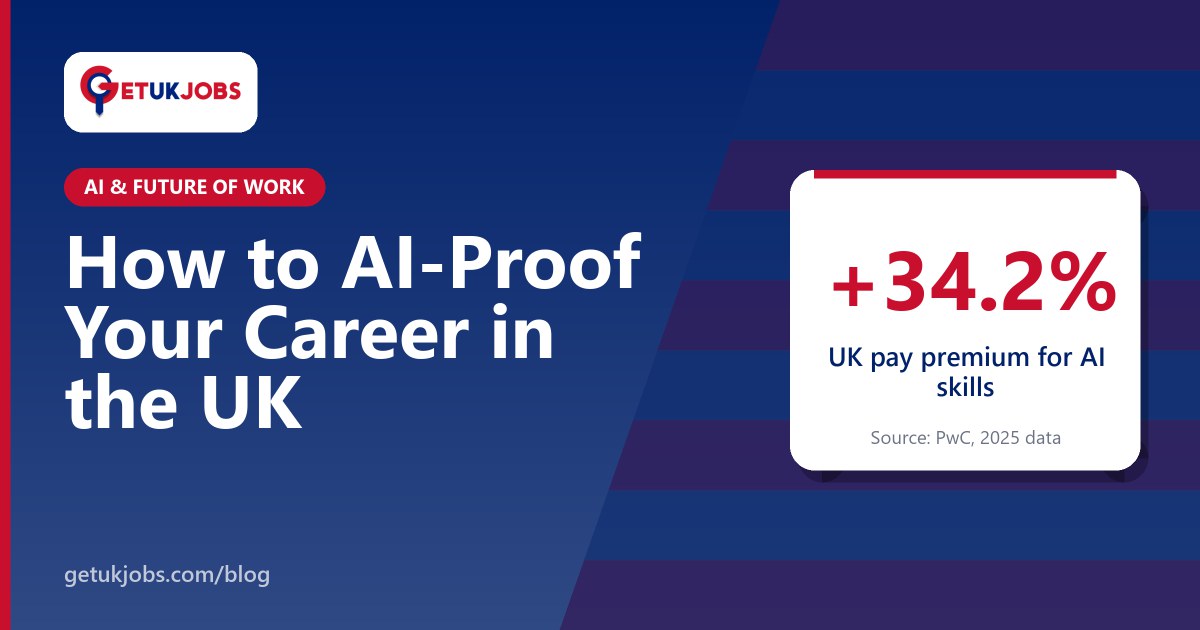
- The UK wage premium for AI skills hit 34.2% in 2025, up from 11% in 2024 (PwC 2026 UK AI Jobs Barometer).
Is AI taking jobs in the UK in 2026?
Mostly not in the dramatic, mass-redundancy way the headlines suggest. UK unemployment was 4.9% in May to July 2026, up only 0.2 percentage points on the year (ONS Labour market overview). That isn't what a wave of AI job losses would look like.
What AI is doing is changing hiring rather than firing. Rather than making existing staff redundant, many employers are simply not replacing people who leave, or are filling fewer junior roles because AI tools now handle part of that work. That's harder to see in the unemployment figures, but it shows up clearly in vacancy data.
There is one caveat worth keeping in mind. Vacancies fell to 702,000 in June to August 2026, the lowest level outside the pandemic since 2014 (ONS). Higher employer National Insurance contributions from April 2025 and a rising National Living Wage have also made hiring more expensive. AI is one cause of the slowdown, not the only one.
Why are graduate and entry-level jobs being hit hardest?
Because the tasks AI does well are the tasks juniors used to learn on: first drafts, research summaries, data entry, basic coding, document review and customer queries. When a manager can get a decent first draft from an AI tool in seconds, the business case for a graduate trainee gets weaker.
The numbers back this up:
- Adzuna recorded 8,383 graduate vacancies in July 2026, against 15,397 a year earlier, a 45.6% drop.
- A Work Foundation survey of 1,001 senior UK business leaders (carried out by Survation in May 2026) found 36% had cut entry-level roles, and 43% blamed AI or automation investment. Among large employers, that rose to 60%.
- The Institute of Student Employers has reported around 140 applications per graduate vacancy, the highest since its records began in 1991.
In plain English: the first job is getting harder to land, even though the overall jobs market hasn't collapsed. That matters, because people who can't get started now risk missing the on-the-job learning that leads to better-paid roles later.
Which UK jobs are most exposed to AI?
Exposure isn't the same as replacement. An "exposed" job is one where AI can do a meaningful share of the tasks. Sometimes that cuts the number of people needed; often it changes what those people spend their day doing.
A 2023 Department for Education analysis found that professional, office-based occupations are the most exposed to large language models, particularly in finance, law and business management. That's the opposite of earlier automation waves, which hit factory and manual work first.
| Exposure | Example UK roles | What's likely to change |
|---|---|---|
| High | Administrative and clerical staff, data entry, call centre and customer service agents, bookkeepers, paralegals, junior copywriters, translators | Fewer new hires; remaining roles shift towards checking AI output and handling complex cases |
| Medium | Accountants, solicitors, marketing managers, software developers, financial analysts, HR advisers, teachers | Big productivity gains; routine tasks automated, judgement and client work become the job |
| Low | Nurses, care workers, electricians, plumbers, chefs, construction trades, physiotherapists, police officers | Limited direct impact; hands-on, physical and person-to-person work is hard to automate |
The ONS data points the same way. Of UK businesses with 10 or more staff that use AI, 38% said administrative and clerical roles were the most affected in September 2026, up from 29% when the question was first asked in December 2025.
Which UK sectors are adopting AI fastest?
Adoption is very uneven. According to the ONS, close to three in five information and communication businesses (58%) were using AI in mid-2026, compared with 13% in construction. Larger firms are well ahead: roughly half of businesses with 250 or more employees use AI, against around three in ten firms overall.
That gap matters if you're job hunting. Tech, financial services and professional services are where AI is reshaping roles fastest, and where AI skills are most likely to be listed in job adverts. Trades, care and construction are moving much more slowly.
Is AI creating jobs in the UK as well?
Yes, and it's easy to miss among the gloomier headlines. PwC's 2026 UK AI Jobs Barometer, published on 15 June 2026, found:
- Job adverts for specialist AI roles rose from about 112,000 in 2024 to almost 180,000 in 2025.
- Workers with AI skills earned a 34.2% wage premium in 2025, triple the 11% premium a year earlier.
- The most AI-embedded organisations reported far higher productivity growth than the rest.
Most of the new demand isn't for AI researchers. It's for accountants, marketers, analysts, recruiters and managers who can use AI tools well. That's the real opportunity: AI is turning into a core workplace skill, in the same way Excel did 30 years ago.
Will AI take my job? A quick self-check
Ask yourself these four questions about your current role:
- How much of my week is routine screen work? If most of it is processing, summarising or drafting to a template, your role is exposed.
- Does my job depend on physical presence or hands-on skill? If yes, direct AI risk is low.
- How much of my value is judgement, relationships or accountability? These are the parts AI supports rather than replaces.
- Am I already using AI tools at work? People who do are the ones getting the premium. People who avoid them are the ones most at risk.
If you scored "exposed" on the first question and "no" on the last, it's worth acting now. Our guide on how to AI-proof your career in the UK has practical steps, including free government-backed training.
What is the UK government doing about AI and jobs?
In 2025 the government launched a partnership with employers including Google, Microsoft, IBM, BT and Amazon to train 7.5 million UK workers in AI skills by 2030, with training materials offered free of charge (GOV.UK). Skills England is also working with employers on the skills gaps AI is creating.
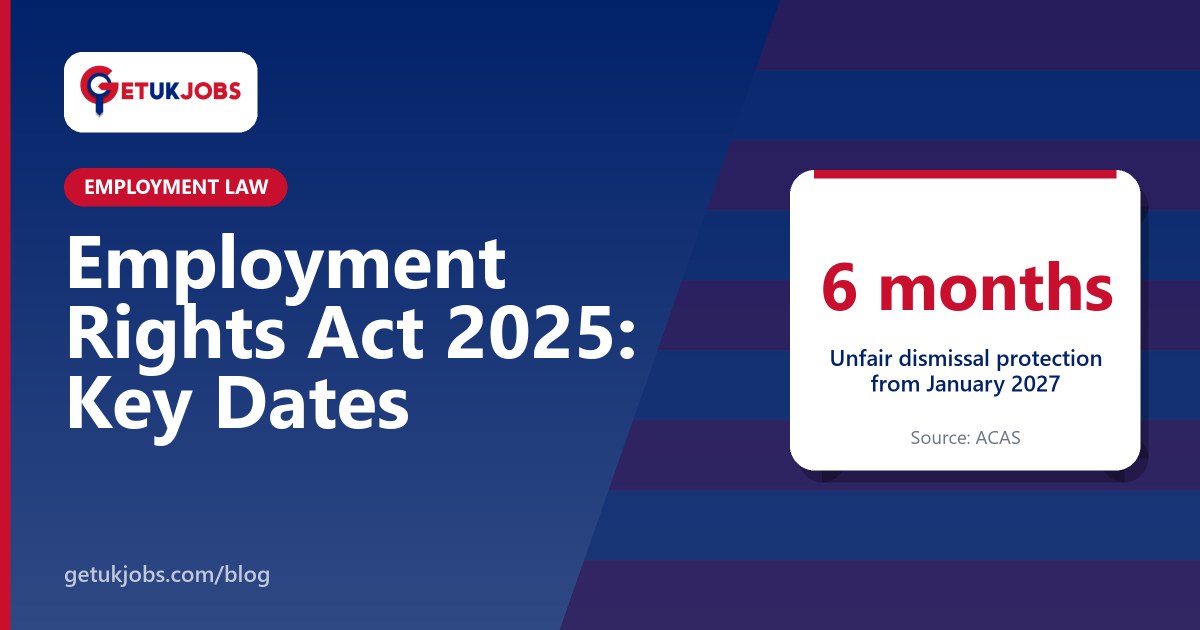
There is no UK law that specifically restricts employers replacing roles with AI. Normal employment law still applies, though. Redundancies must be genuine and fair, and the Employment Rights Act 2025 will strengthen protections further from January 2027.
What should UK job seekers do now?
- Learn the AI tools used in your field, and say so on your CV with a concrete example of what you achieved with them.
- Target growing, less-exposed work if you're early in your career: healthcare, skilled trades, engineering and roles built around people.
- Look beyond graduate schemes. Apprenticeships, smaller employers and contract roles are filling some of the gap.
- Update your CV for a tougher market. Our UK CV guide covers the format recruiters expect in 2026.
AI won't decide your career on its own. But the people who learn to work with it are already being paid more than those who don't. Browse the latest jobs in the UK on GetUKJobs and look at how many now mention AI skills.
Sources
- ONS, Labour market overview, UK: September 2026; Business Insights and Conditions Survey (AI questions), 2026
- PwC, 2026 UK AI Jobs Barometer, 15 June 2026
- Adzuna UK Job Market Report, July 2026 data
- Work Foundation (Lancaster University) / Survation survey of 1,001 senior business leaders, May 2026
- Department for Education, The impact of AI on UK jobs and training, November 2023
- GOV.UK, AI skills partnership announcement, 2025