Employment Rights Act 2025: What Changes for UK Workers in 2026 and 2027
The Employment Rights Act 2025 is the biggest change to UK workers' rights in a generation. Some changes are already law, including day-one sick pay and paternity leave; the biggest, six-month unfair dismissal protection, arrives on 1 January 2027. Here is the full timeline.
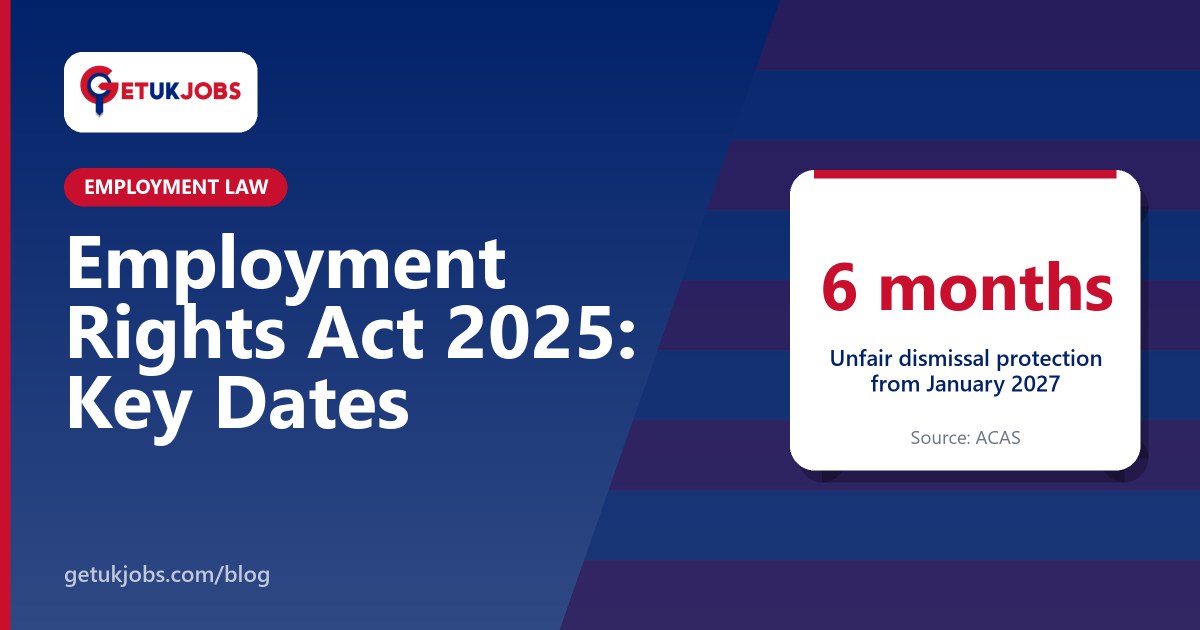
Table of contents
- What is the Employment Rights Act 2025?
- Employment Rights Act 2025 timeline: every key date
- What changed in April 2026?
- Statutory Sick Pay from day one
- Day-one paternity leave and parental leave
- The Fair Work Agency
- What changes on 1 January 2027 for unfair dismissal?
- What does this mean for employees?
- What should employers do now?
- Does the Employment Rights Act apply in Scotland, Wales and Northern Ireland?
- Sources
Last reviewed: 17 October 2026. Dates are taken from ACAS and GOV.UK; some 2027 measures still await regulations.
Short answer: the Employment Rights Act 2025 received Royal Assent on 18 December 2025 and is coming into force in stages until 2027. Since 6 April 2026, Statutory Sick Pay has been paid from the first day of sickness and paternity leave has been a day-one right. From 1 October 2026, the time limit for most employment tribunal claims doubled from three to six months. The biggest change comes on 1 January 2027, when the qualifying period for unfair dismissal falls from two years to six months and the cap on compensation is removed.
Here's what's already law, what's coming next, and what it means whether you're an employee or an employer.
Key takeaways
- 6 April 2026: SSP payable from day one, with the lower earnings limit removed; paternity leave and unpaid parental leave became day-one rights; the Fair Work Agency was set up.
- 1 October 2026: most employment tribunal time limits extended from 3 to 6 months.
- 30 October 2026: employers must take "all reasonable steps" to prevent sexual harassment, including by third parties.
- 1 January 2027: unfair dismissal protection after 6 months instead of 2 years, with no compensation cap.
- The Act covers England, Scotland and Wales. It does not apply in Northern Ireland, which has its own employment law.
What is the Employment Rights Act 2025?
The Employment Rights Act 2025 is a major package of UK employment law reforms, based on the government's "Make Work Pay" plan. It strengthens rights for employees from their first day at work, tightens rules on zero-hours contracts and "fire and rehire", creates a new enforcement body called the Fair Work Agency, and updates trade union law. It became law on 18 December 2025, but most changes need commencement dates or regulations, so they're arriving in phases.
Employment Rights Act 2025 timeline: every key date
| Date | What changes |
|---|---|
| 18 December 2025 | Royal Assent. Minimum service levels for strikes removed. |
| 18 February 2026 | Trade union changes: industrial action notice cut to 10 days, mandates last 12 months, dismissal for taking industrial action automatically unfair. |
| 6 April 2026 | Day-one SSP and no lower earnings limit; day-one paternity leave and unpaid parental leave; Fair Work Agency set up; sexual harassment can be a whistleblowing disclosure; employers must keep holiday records for six years; protective award for collective redundancy failures doubled to 180 days' pay. |
| 1 October 2026 | Most employment tribunal time limits extended from three months to six months. |
| 30 October 2026 | Duty to take "all reasonable steps" to prevent sexual harassment; employer liability for harassment by third parties such as customers; new trade union access and facility rights. |
| 1 January 2027 | Unfair dismissal qualifying period cut to six months; compensation cap removed; dismissing to force contract changes ("fire and rehire") automatically unfair in most cases; employers must tell workers they can join a union. |
| During 2027 | Guaranteed hours for zero-hours and low-hours workers; stronger flexible working rights; unpaid bereavement leave; mandatory gender pay gap and menopause action plans for large employers; stronger pregnancy and maternity protections; regulation of umbrella companies. |
Source: ACAS, Employment Rights Act 2025.
What changed in April 2026?
Statutory Sick Pay from day one
Before April 2026, Statutory Sick Pay (SSP) didn't start until your fourth day off sick, and you got nothing at all if you earned below the lower earnings limit. Both rules have gone. SSP is now paid from the first day of sickness, and low earners qualify too, receiving a percentage of their normal pay where that's lower than the standard SSP rate.
Day-one paternity leave and parental leave
Fathers and partners no longer need 26 weeks' service to take paternity leave, and unpaid parental leave is also available from day one. Statutory paternity pay still has its own eligibility rules, so check those separately.
The Fair Work Agency
A new state enforcement body, the Fair Work Agency, brings together enforcement of the minimum wage, holiday pay, SSP and employment agency rules. It can investigate employers and take action on workers' behalf, so you don't always have to bring a claim yourself.
What changes on 1 January 2027 for unfair dismissal?
This is the change most people will notice. Until now, most employees needed two years' continuous service before they could claim unfair dismissal. From 1 January 2027 that drops to six months (CIPD).
The cap on unfair dismissal compensation is also being removed, so awards can reflect the full financial loss. And dismissing people who refuse a change to their contract, then re-hiring them on worse terms ("fire and rehire"), will be automatically unfair in most cases.
The original plan was for protection from day one. The final Act settled on six months, which effectively works like a probation period during which dismissal is easier.
What does this mean for employees?
- You're protected sooner. From January 2027, six months in a job gives you unfair dismissal rights.
- You have longer to act. Most tribunal claims now have a six-month time limit, though ACAS early conciliation still has to come first.
- Being off sick costs you less. SSP starts on day one.
- New parents get more flexibility from the start of a new job.
- Zero-hours workers will gain a right to guaranteed hours that reflect what they regularly work, once the 2027 rules start.
If you're job hunting, these rights make changing jobs less risky than before: you won't have to wait two years to be protected. Browse current jobs in the UK on GetUKJobs.
What should employers do now?
- Review probation periods so they end well before the six-month mark, with proper reviews and documentation.
- Update payroll for day-one SSP and check sick pay policies.
- Do a harassment risk assessment before 30 October 2026, including risks from customers and clients.
- Check holiday records go back six years, as the Fair Work Agency can ask for them.
- Plan for zero-hours changes in 2027 if you use variable-hours contracts.
- Train managers. Most claims start with a badly handled conversation.
Does the Employment Rights Act apply in Scotland, Wales and Northern Ireland?
It applies in England, Scotland and Wales. Employment law is devolved in Northern Ireland, so the Act doesn't apply there, and NI workers keep the existing NI framework unless the Northern Ireland Assembly makes its own changes. In Scotland, there's an extra procedural change: from 9 November 2026, breach of contract claims in Scottish tribunals have a six-month time limit.
Sources
- ACAS, Employment Rights Act 2025: what's changing and when
- CIPD, Unfair dismissal: changes under the Employment Rights Act 2025
- GOV.UK, Employment Rights Act 2025 implementation roadmap
This article is general information, not legal advice. For advice on a specific situation, contact ACAS (0300 123 1100) or an employment solicitor.