UK Skilled Worker Visa 2026: Salary Threshold, Rules and How to Apply
To get a UK Skilled Worker visa in 2026 you need a graduate-level job offer from a licensed sponsor, paying at least £41,700 or the going rate, plus B2-level English. Here is every rule that changed since 2025, explained in plain English.
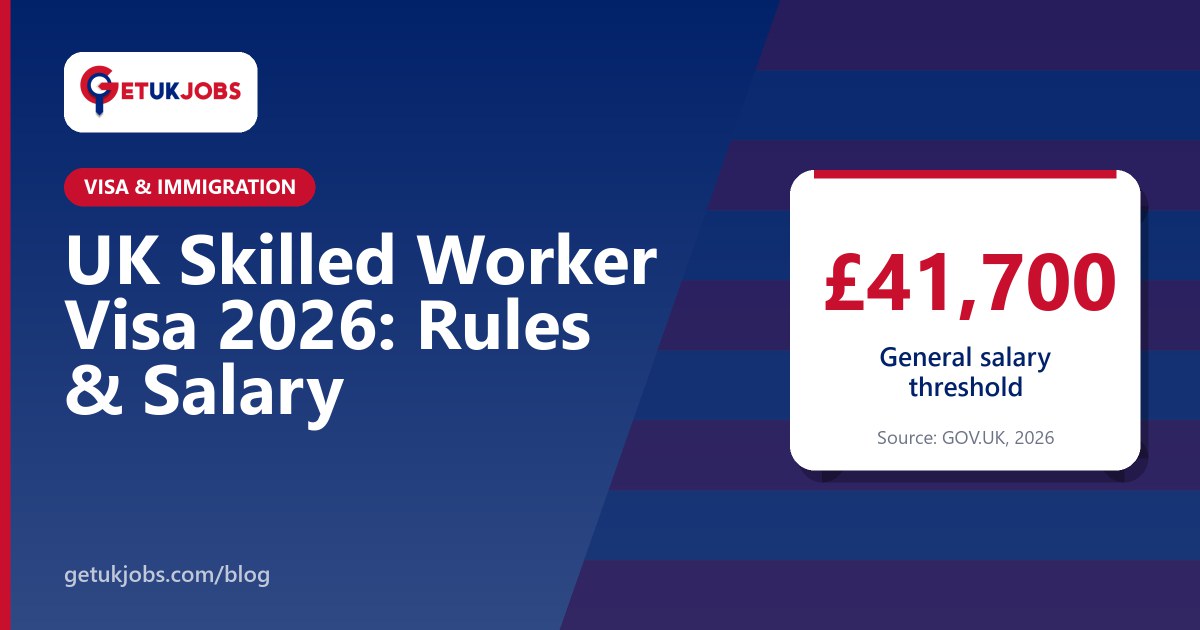
Table of contents
- What is the Skilled Worker visa?
- What is the Skilled Worker visa salary threshold in 2026?
- What changed for Skilled Worker visas in 2025 and 2026?
- Which jobs qualify for a Skilled Worker visa?
- What English level do you need?
- How long does it take to get settlement (ILR)?
- How to apply for a Skilled Worker visa: step by step
- What does it cost employers to sponsor a worker?
- Watch out for visa job scams
- Sources
Last reviewed: 17 October 2026. Immigration rules change often; always check GOV.UK before applying.
Short answer: to get a UK Skilled Worker visa in 2026, you need a job offer from a Home Office-licensed sponsor for a graduate-level role (RQF level 6), paying at least £41,700 a year or the going rate for that occupation, whichever is higher. You must also prove English at B2 level for applications made since 8 January 2026. The rules tightened sharply from 22 July 2025, when the threshold rose from £38,700 and around 180 lower-skilled occupations were removed from the list.
Here's what each rule means in practice, what's changed, and what's still only a proposal.
Key takeaways
- General salary threshold: £41,700 or the occupation's going rate, whichever is higher (since 22 July 2025).
- Jobs must normally be at RQF level 6 (degree level) or above.
- English requirement raised from B1 to B2 for new applicants from 8 January 2026.
- Employers pay an Immigration Skills Charge of £1,320 a year (£480 for small or charitable sponsors) since 16 December 2025.
- The standard route to settlement is still 5 years. A 10-year "earned settlement" model has been proposed but was not in the Immigration Rules as of October 2026.
What is the Skilled Worker visa?
The Skilled Worker visa is the UK's main work visa for people from outside the UK and Ireland. It lets you live and work in the UK for an approved employer, in an eligible job, for up to five years at a time before you need to extend. It replaced the old Tier 2 (General) visa in December 2020.
You can't apply on your own. A UK employer with a sponsor licence has to offer you a job and assign you a certificate of sponsorship, an electronic record with a reference number that you use in your application.
What is the Skilled Worker visa salary threshold in 2026?
You must normally be paid the higher of:
- £41,700 a year, or
- the going rate for your occupation code, which can be higher for many professional jobs.
Lower thresholds are available in some situations, down to £33,400 a year: for example, if you're a new entrant to the labour market (such as a recent graduate or someone under 26), have a relevant PhD, or are working in a job on the Immigration Salary List (GOV.UK). Healthcare and education jobs follow national pay-scale rules instead.
In short: if your offer is below £41,700, check the going rate and the reduced-threshold options before assuming you don't qualify.
What changed for Skilled Worker visas in 2025 and 2026?
| Change | From | To | Date |
|---|---|---|---|
| General salary threshold | £38,700 | £41,700 | 22 July 2025 |
| Minimum skill level | RQF level 3 (A-level) | RQF level 6 (degree) | 22 July 2025 |
| Overseas recruitment of care workers | Allowed | Closed to new overseas applicants | 22 July 2025 |
| Immigration Skills Charge (large sponsor, per year) | £1,000 | £1,320 | 16 December 2025 |
| Immigration Skills Charge (small or charity, per year) | £364 | £480 | 16 December 2025 |
| English language level | B1 | B2 | 8 January 2026 |
| Graduate visa length (new applicants) | 2 years | 18 months | 1 January 2027 |
People who already held a Skilled Worker visa before 22 July 2025 can generally extend or change employer under transitional arrangements, including the old lower skill level, for now. If that's you, check your specific position on GOV.UK.
Which jobs qualify for a Skilled Worker visa?
Since 22 July 2025, eligible jobs must normally be at degree level (RQF 6 or above). That covers most professional roles, including engineers, software developers, accountants, solicitors, doctors, nurses, teachers, architects, scientists and senior managers.
Some jobs below degree level remain eligible on a time-limited basis if they're on the Temporary Shortage List or the Immigration Salary List. These lists are reviewed regularly, so a role that qualifies today may not qualify next year.
What English level do you need?
For applications made from 8 January 2026, you need English at B2 on the Common European Framework of Reference (CEFR), the level of an upper-intermediate speaker who can handle complex work conversations. You can usually prove it with an approved Secure English Language Test (SELT), a degree taught in English, or nationality of a majority English-speaking country.
How long does it take to get settlement (ILR)?
Right now, Skilled Workers can usually apply for indefinite leave to remain (ILR) after 5 years, if they meet the salary and other requirements at that point.
The government has proposed an "earned settlement" model, with a 10-year baseline that could be shortened for people who earn more or work in priority sectors. However, the autumn Statement of Changes to the Immigration Rules (HC 584), laid on 3 September 2026, didn't include it. As of mid-October 2026 it's still a proposal, and the current 5-year rules apply. We'll update this guide when final rules are published.
How to apply for a Skilled Worker visa: step by step
- Find a licensed sponsor. Check the employer is on the Home Office register of licensed sponsors, then apply for roles. On GetUKJobs, search for jobs in the UK that mention visa sponsorship.
- Get your job offer and certificate of sponsorship. Your employer assigns it, with your occupation code and salary.
- Check you meet the rules. Salary (the higher of £41,700 or the going rate, unless a reduction applies), skill level, and English at B2.
- Gather your documents. Passport, certificate of sponsorship reference, English evidence and, for some roles, a criminal record certificate. Some nationalities need a tuberculosis test.
- Apply online on GOV.UK, pay the application fee and the Immigration Health Surcharge, and verify your identity using the app or at a visa centre.
- Wait for a decision. Applications from outside the UK typically take around three weeks, longer at busy times.
What does it cost employers to sponsor a worker?
As well as the sponsor licence itself, employers pay the Immigration Skills Charge for every sponsored worker: £1,320 a year for large sponsors and £480 a year for small or charitable sponsors, since 16 December 2025. For a five-year visa, that's £6,600 per worker for a large employer, paid upfront. Employers can't legally pass this charge on to the worker.
Hiring internationally? Make it clear in your adverts that you sponsor visas. It's one of the most searched-for phrases by overseas candidates. You can create a free employer account on GetUKJobs and post your vacancies.
Watch out for visa job scams
Genuine UK employers never charge you for a certificate of sponsorship, and you can't buy a Skilled Worker visa. If anyone asks for money to "guarantee" a sponsored job, walk away and report it to Action Fraud. Always check the employer on the official register of licensed sponsors.
Sources
- GOV.UK, Skilled Worker visa: your job and salary requirements
- Home Office, Statement of Changes to the Immigration Rules HC 584, 3 September 2026
- Home Office announcements on the Immigration Skills Charge (December 2025) and Graduate route (from January 2027)
This guide is general information, not legal advice. For your own case, speak to a regulated immigration adviser or solicitor.