What Is the Average Salary in the UK in 2026? (ONS Figures Explained)
The typical full-time worker in the UK earns £39,039 a year before tax, according to the latest ONS figures. Here is what that means per month and after tax, how fast pay is rising in 2026, and how to tell whether your own salary is above or below average.
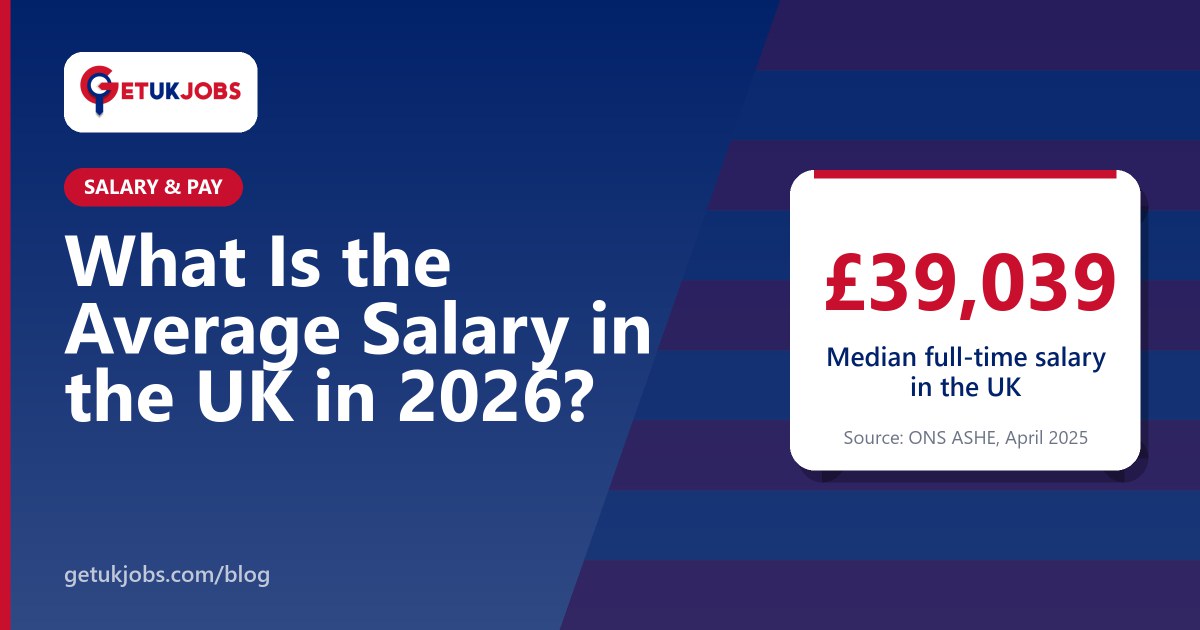
Table of contents
- What is the average UK salary in 2026?
- Median vs mean: which "average" should you use?
- What does the average salary look like per month, week and hour?
- How we worked out the take-home figure
- How fast are UK salaries rising in 2026?
- What is the minimum wage in the UK in 2026?
- Why do salaries vary so much across the UK?
- Is my salary good for the UK?
- How can I earn more than the average?
- Sources
Last reviewed: 17 October 2026
Short answer: the average salary in the UK is £39,039 a year (the median for full-time employees), according to the ONS Annual Survey of Hours and Earnings for April 2025, the latest annual figures. That's about £3,253 a month or £766.60 a week before tax, and roughly £31,600 a year after tax and National Insurance. Pay is still rising in 2026: regular earnings grew 3.5% in the year to May–July 2026 (ONS).
That headline hides a lot of variation by job, region, age and sector. Here's how to read the numbers, and how to work out where your own pay sits.
Key takeaways
- Median full-time pay was £39,039 in April 2025, up 4.3% on a year earlier (ONS ASHE).
- Regular pay growth was 3.5% in May–July 2026: 2.9% in the private sector and 6.3% in the public sector (ONS).
- After inflation, regular pay rose only 0.6% in real terms over the same period.
- The National Living Wage has been £12.71 an hour since 1 April 2026, about £24,800 a year for a 37.5-hour week.
- The full-time gender pay gap was 6.9% in April 2025 (ONS).
What is the average UK salary in 2026?
The ONS publishes the official annual figure each autumn, based on a sample of HMRC payroll records taken in April. The latest release, published on 23 October 2025, showed median gross annual earnings of £39,039 for full-time employees who'd been in the same job for at least a year (ONS, Employee earnings in the UK: 2025).
Since then, pay has kept rising. The ONS monthly figures show regular pay (excluding bonuses) up 3.5% in the year to May–July 2026. That puts a typical full-time salary somewhere around £40,000 to £41,000 by late 2026, though the official 2026 figure won't be published until the next annual release.
Median vs mean: which "average" should you use?
You'll see two kinds of average quoted, and they can be thousands of pounds apart.
- Median: the middle salary. Half of full-time workers earn more and half earn less. This is the figure the ONS leads with, because it isn't distorted by a small number of very high earners.
- Mean: total pay divided by the number of workers. Big salaries in finance, law and senior management pull it up, so it's always higher than the median.
If you want to know whether you're paid "normally", compare yourself with the median.
What does the average salary look like per month, week and hour?
| Period | Gross (before tax) | Approx. take-home* |
|---|---|---|
| Year | £39,039 | £31,628 |
| Month | £3,253 | £2,636 |
| Week | £766.60 | £608 |
| Hour (full-time median, excluding overtime) | £19.67 | — |
*Take-home worked out for 2026/27 in England, Wales and Northern Ireland: £12,570 Personal Allowance, 20% basic-rate Income Tax and 8% employee National Insurance. It excludes pension contributions and student loan repayments, which would reduce it further. Scotland has different Income Tax bands, so take-home pay there is slightly different. Hourly figure from ONS ASHE April 2025.
How we worked out the take-home figure
On a £39,039 salary, the first £12,570 is tax-free. The remaining £26,469 is taxed at 20% (£5,293.80 of Income Tax) and attracts 8% employee National Insurance (£2,117.52). That leaves about £31,628 a year. If you pay 5% into a workplace pension through salary sacrifice, your take-home will be lower again, but you'll pay a little less tax and National Insurance.
How fast are UK salaries rising in 2026?
Pay growth has settled after the high-inflation years. According to the ONS labour market overview for September 2026:
- Regular pay grew 3.5% a year in May–July 2026, and has been fairly steady for five three-month periods in a row.
- Public-sector pay grew faster (6.3%) than private-sector pay (2.9%), mainly because of public-sector pay awards.
- After adjusting for inflation (CPIH), real regular pay rose only 0.6%.
In short: most people's pay is still edging ahead of prices, but only just. With vacancies at 702,000, their lowest level outside the pandemic since 2014, employers have less pressure to offer big rises to keep staff.
What is the minimum wage in the UK in 2026?
The National Living Wage and National Minimum Wage rates rose on 1 April 2026 (GOV.UK):
| Rate | Hourly rate from 1 April 2026 | Annual (37.5 hours a week) |
|---|---|---|
| National Living Wage (21 and over) | £12.71 | £24,785 |
| 18 to 20 | £10.85 | £21,158 |
| 16 to 17 | £8.00 | £15,600 |
| Apprentice rate | £8.00 | £15,600 |
A full-time worker on the National Living Wage earns roughly 63% of the median full-time salary.
Why do salaries vary so much across the UK?
Four factors explain most of the difference:
- Location. London has the highest earnings of any UK region, while the North East and Wales are among the lowest. London pay is higher partly because living costs are, so a higher salary there doesn't always mean more money left over.
- Occupation. Managers, directors and senior professionals earn far more than the median; sales, customer service and elementary occupations earn less.
- Age and experience. Earnings usually rise steeply through your 20s and 30s, then level off in your 40s and 50s.
- Sector. Finance, energy, IT and professional services pay the most; hospitality, retail and care pay the least.
Gender is a factor too. The median gender pay gap for full-time employees was 6.9% in April 2025, and it's wider when part-time workers are included, because more women work part-time.
Is my salary good for the UK?
As a rough guide for a full-time job:
- Below £25,000: close to minimum wage territory.
- £30,000 to £39,000: around the middle of the range, below the median.
- Around £39,000 to £41,000: typical, about the national median.
- £50,000 or more: comfortably above average. From £50,271 you pay higher-rate tax on income above that level.
- £60,000 or more: well into the top quarter of earners nationally.
The most useful comparison isn't the national figure, though. It's what employers are paying for your job, in your area, right now. Job adverts with salary ranges are the quickest way to find out. You can search jobs in the UK by role and city, such as jobs in London or jobs in Birmingham, and compare the ranges.
How can I earn more than the average?
- Benchmark your pay against current adverts for your role before your next review.
- Ask for a pay rise with evidence: market rates, extra responsibilities and measurable results.
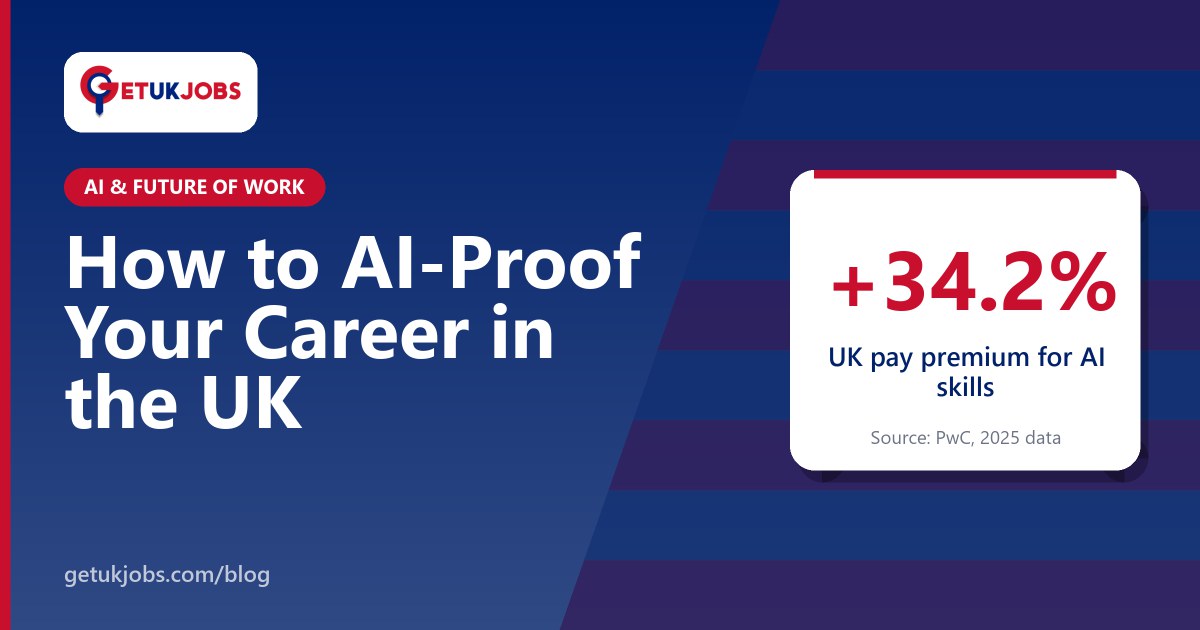
- Build skills employers pay a premium for. PwC found UK workers with AI skills earned a 34.2% wage premium in 2025. See how to AI-proof your career.
- Move jobs. Switching employer is still one of the fastest ways to a bigger pay rise.
Sources
- ONS, Employee earnings in the UK: 2025 (Annual Survey of Hours and Earnings), 23 October 2025
- ONS, Labour market overview, UK: September 2026
- GOV.UK, National Living Wage increases to £12.71 per hour, April 2026
- HMRC, Income Tax and National Insurance rates, 2026/27